

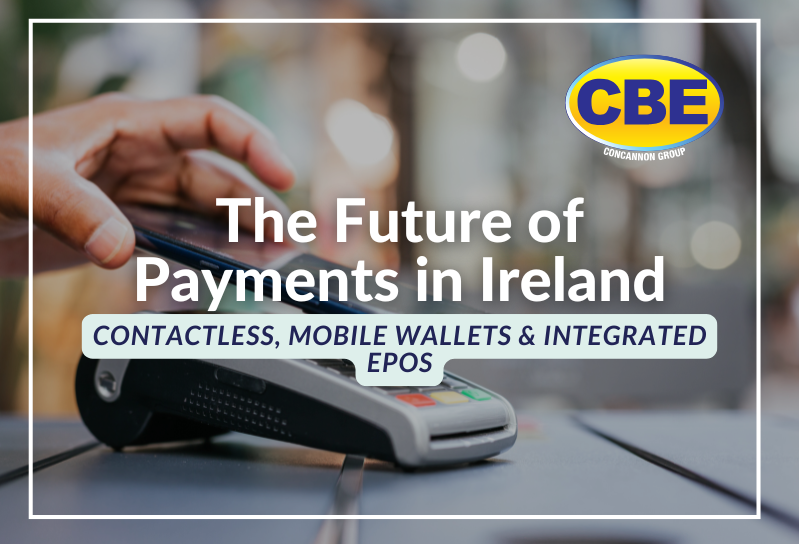
Irish consumers have fundamentally transformed how they pay for goods and services. Walk into any café in Dublin, any boutique in Galway, or any restaurant in Cork, and you’ll witness the same phenomenon: customers effortlessly tapping phones against payment terminals, completing transactions in seconds without ever reaching for a physical card. This isn’t a glimpse of the future—it’s the present reality of Irish commerce, and businesses that fail to adapt risk being left behind.
The Contactless Revolution: Ireland’s Payment Landscape
The statistics tell a compelling story. Consumers made more than 1.4 billion contactless payments to the value of €24.8 billion in shops, restaurants and other retail outlets in the 12 months to the end of June 2024, according to the Banking & Payments Federation Ireland’s analysis. This represents not merely an incremental shift, but a wholesale transformation of consumer behaviour.
What makes this trend particularly significant for Irish businesses is its trajectory. Contactless payments aren’t plateauing; they’re accelerating. The convenience factor has proven irresistible to consumers who’ve experienced the speed and simplicity of tap-and-go transactions. For businesses, this shift demands more than simply accepting contactless payments—it requires infrastructure that can handle high transaction volumes efficiently whilst providing the visibility needed to manage operations effectively.
Regional variations offer interesting insights into adoption patterns. Urban centres like Dublin lead in contactless usage, but the technology has permeated every corner of Ireland, from market towns to coastal villages. This widespread adoption means businesses of all sizes, regardless of location, must now consider contactless capability as essential rather than optional.
Mobile Wallets: The Dominant Force in Digital Payments
Perhaps the most striking development in Ireland’s payment ecosystem is the rapid ascendancy of mobile wallets. Digital wallets enable users to store payment credentials on their mobile devices and complete transactions using near-field communication (NFC) technology, offering enhanced security through tokenisation and biometric authentication.
Recent data reveals that mobile wallets now account for approximately half of all contactless payments in Ireland. This represents a remarkable shift from traditional card tapping. Consumers have embraced the convenience of paying with their phones or smartwatches, eliminating the need to carry physical cards altogether.
Understanding Mobile Wallet Technology
Mobile wallets work by creating encrypted tokens that represent payment card details without exposing actual account numbers during transactions. When a customer taps their phone, the wallet transmits this token to the payment terminal, which processes the transaction through standard card networks. The actual card details never leave the device, providing superior security compared to traditional card payments.
For Irish businesses, this technology offers several advantages. Mobile wallet transactions process quickly, reducing queue times during peak periods. The enhanced security features reduce fraud risk, and customers appreciate the convenience factor, often leading to increased spending and higher transaction values.
Real-World Applications: How Irish Businesses Are Adapting
Consider a bustling Dublin café during morning rush hour. Traditional payment methods would create bottlenecks as customers fumble for cards, enter PINs, or wait for chip transactions to process. With integrated payment solutions like CBE Pay, transactions complete in seconds. The system automatically syncs with the EPOS, updating inventory, recording the sale, and providing real-time transaction data—all whilst the next customer steps forward.
Or examine a busy restaurant in Galway on a Saturday evening. Tables turn slowly when customers must wait for bills, servers must process payments at a fixed terminal, and then return with receipts. CBE Mobile Order & Pay transforms this experience entirely. Guests can add items to their order or pay their bill directly from the table using their mobile devices. Servers manage more tables simultaneously, labour efficiency improves dramatically, and customer satisfaction increases because diners control their dining pace.
The Retail Perspective
Fashion boutiques, gift shops, and speciality retailers face unique challenges during peak trading periods. A jewellery shop in Killarney during tourist season, for instance, might experience sudden surges in customer traffic. With integrated EPOS and payment solutions, staff can process transactions anywhere in the store using mobile devices, preventing queue formation and capturing sales that might otherwise be lost to impatient customers.
Integrated EPOS systems streamline operations by connecting payment processing with inventory management, customer data, and reporting functions, enabling businesses to operate more efficiently whilst gathering valuable insights about customer behaviour and product performance.
The Business Case for Integration
The fundamental advantage of integrated payment and EPOS systems lies in their ability to eliminate operational friction. Traditional setups require staff to manage multiple systems: a payment terminal operates independently from the till system, which operates separately from inventory management, which remains disconnected from reporting tools. Each handoff point introduces opportunities for error, delay, and inefficiency.
Integration collapses these silos into a unified ecosystem. When a customer pays using CBE Pay, the transaction automatically updates inventory levels, generates accurate sales reports, reconciles end-of-day figures, and provides real-time visibility into business performance. Staff spend less time on administrative tasks and more time serving customers. Management gains immediate insights rather than waiting for end-of-day reports.
Financial Advantages Beyond Transaction Processing
Speed matters in payment processing, but so does cash flow management. Next business day payouts—a feature of modern integrated payment solutions—ensure businesses maintain working capital availability. For small to medium-sized Irish businesses operating on tight margins, receiving funds rapidly can mean the difference between seizing opportunities and missing them.
Competitive transaction rates compound these advantages. When businesses process hundreds or thousands of transactions monthly, even small differences in processing fees significantly impact profitability. Transparent, competitive pricing structures allow accurate forecasting and budget management, eliminating unwelcome surprises from hidden charges or tiered pricing models.
The Hospitality Sector: Labour Efficiency Meets Customer Satisfaction
Irish hospitality businesses face persistent labour challenges. Staff shortages, high turnover rates, and increasing wage costs demand operational efficiency improvements. Technology offers partial solutions, but only when implemented thoughtfully.
Mobile order and pay systems address multiple pain points simultaneously. Servers can handle more tables without compromising service quality because they’re not tethered to fixed terminals. Orders transmit directly to kitchen systems, reducing transcription errors and improving accuracy. Customers appreciate the autonomy to order additional items or pay when convenient rather than waiting for server availability.
Consider the practical implications for a busy pub in Temple Bar or a restaurant on Shop Street. During peak hours, server efficiency directly correlates with revenue. A server managing five tables might struggle to provide attentive service when constantly returning to a fixed terminal for payment processing. That same server could comfortably manage seven or eight tables with table-side payment capability, directly increasing revenue capacity without adding labour costs.
Security Considerations in the Digital Payment Era
The transition to mobile wallets and contactless payments raises legitimate security questions. Businesses and consumers alike wonder whether convenience compromises safety.
The reality is somewhat counterintuitive: mobile wallet payments often provide superior security compared to traditional card transactions. Tokenisation ensures that actual card details never transmit during transactions. Biometric authentication (fingerprint or facial recognition) adds security layers beyond simple PIN entry. If a phone is lost or stolen, remote wiping capabilities protect stored payment information.
For businesses, integrated payment systems with real-time monitoring enable rapid fraud detection. Unusual transaction patterns trigger alerts immediately rather than appearing only in retrospective reports. This proactive approach to security helps protect both businesses and their customers.
Future-Proofing Your Payment Infrastructure
The pace of change in payment technology shows no signs of slowing. Cryptocurrencies, biometric payments, and other innovations continue emerging. However, businesses needn’t chase every technological novelty. Instead, building on a flexible, integrated foundation allows adaptation as genuine innovations prove their value.
Systems like CBE Pay and CBE Mobile Order & Pay provide this flexibility through their design. They accept current payment methods—contactless cards, mobile wallets, chip and PIN—whilst maintaining the capability to incorporate new technologies as they achieve mainstream adoption.
The key consideration isn’t whether new payment methods will emerge (they will), but whether your infrastructure can accommodate them without requiring complete system replacement. Integrated solutions built on modern platforms offer this adaptability, protecting your technology investment whilst ensuring you can meet evolving customer expectations.
The Competitive Advantage of Being Payment-Forward
Irish consumers increasingly factor payment experience into their patronage decisions. Research indicates that customers will literally walk away from purchases if payment processes prove frustrating or time-consuming. Conversely, seamless payment experiences enhance overall satisfaction, increasing the likelihood of repeat business.
This dynamic creates genuine competitive advantage for payment-forward businesses. A café with quick, efficient payment processing serves more customers during morning rush than one with slower systems. A restaurant with table-side payment capability earns higher customer satisfaction scores and receives better reviews. A retail shop that can process transactions anywhere on the floor provides superior service compared to competitors with fixed checkout points.
These advantages compound over time. Satisfied customers return more frequently, spend more per visit, and recommend businesses to others. The payment infrastructure becomes not merely an operational necessity but an active contributor to business growth.
Environmental and Sustainability Considerations
The shift away from paper receipts, reduced need for physical card production, and elimination of cheque processing contribute to environmental sustainability goals. Digital payment systems generate less waste, require fewer physical resources, and support businesses’ broader sustainability commitments.
For Irish businesses increasingly conscious of environmental impact—and serving customers who share these concerns—payment system choices carry reputational implications beyond mere functionality.
Making the Transition: Practical Considerations
Businesses contemplating payment system upgrades face legitimate questions about implementation complexity, staff training requirements, and transition management. Modern integrated solutions address these concerns through intuitive interfaces, comprehensive training support, and phased implementation approaches.
The most successful transitions begin with clear understanding of current pain points. Where do queues form during peak periods? Where do reconciliation errors occur? Which administrative tasks consume disproportionate staff time? Identifying these friction points helps prioritise system features and measure improvement post-implementation.
Staff engagement proves critical. Systems deliver value only when used effectively, requiring staff buy-in and comfort with new technology. Quality solutions come with comprehensive training and ongoing support—24-hour, 365-day availability ensures that assistance remains accessible whenever needed, not merely during conventional business hours.
The Path Forward
Ireland’s payment landscape has fundamentally transformed, and the pace of change continues accelerating. Contactless payments dominate transactions, mobile wallets represent the fastest-growing payment method, and integrated EPOS systems have become essential for operational efficiency.
Businesses face a straightforward choice: adapt to these realities or accept competitive disadvantage. The good news is that modern payment solutions make adaptation accessible to businesses of all sizes, from single-location retailers to multi-site hospitality operations.
The future of payments in Ireland isn’t distant or theoretical—it’s unfolding now, transaction by transaction, across every retail and hospitality venue in the country. Businesses that embrace this future position themselves for growth, efficiency, and competitive advantage. Those that resist risk obsolescence in a marketplace where customer expectations evolve rapidly and unforgivingly.
Your payment infrastructure should work for your business, not against it. It should accelerate transactions, improve staff efficiency, enhance customer satisfaction, and provide the real-time insights needed for informed decision-making. That’s not an aspirational vision of the future—it’s the achievable present for Irish businesses ready to embrace modern payment technology.